What You Need To Know
Low‑level light therapy for hair commonly targets two ranges: red (≈630–660nm) to act near the scalp surface and near‑infrared (≈800–850nm) to penetrate deeper toward follicles. Combining both bands can improve coverage of skin layers; device power (irradiance) and consistent session timing determine delivered dose. Below are four validated products ranked for practicality, wavelength match, and value. I focus on which actually include both bands, which provide only NIR or only red, and how each fits into a routine.
Red Light Therapy for Hair Growth, Qydenova Wireless Regrowth Cap
Red Light Therapy for Hair Growth, Qydenova Wireless Regrowth Cap stood out for budget-minded users who want a wireless cap format and consistent hands‑free sessions. and balanced scoring across the most useful buying criteria.
View Deal On Amazon
Best dual red and near-infrared LED devices for thicker hair and scalp health
BONTANNY (ranked #2) is the clearest match for combined red + NIR, listing 630/660 and 810/830/850nm. Qydenova (#1) is a wireless cap-style, budget-friendly option but the listing emphasizes red therapy — confirm NIR specs before assuming combined bands. Capillus SPECTRUM (#3) is a familiar cap format from a known brand; confirm whether the product includes NIR on the specific listing. MICROENE (#4) is an ultra‑budget infrared lamp with 850nm emitters (NIR-only) and can be useful as a NIR supplement alongside a red device.
Red Light Therapy for Hair Growth, Qydenova Wireless Regrowth Cap
Qydenova
Wireless cap-style LED device marketed for hair regrowth. Affordable and portable; listing emphasizes red light therapy. Confirm whether the specific model includes near‑infrared emitters (800–850nm) if you want combined-band coverage.
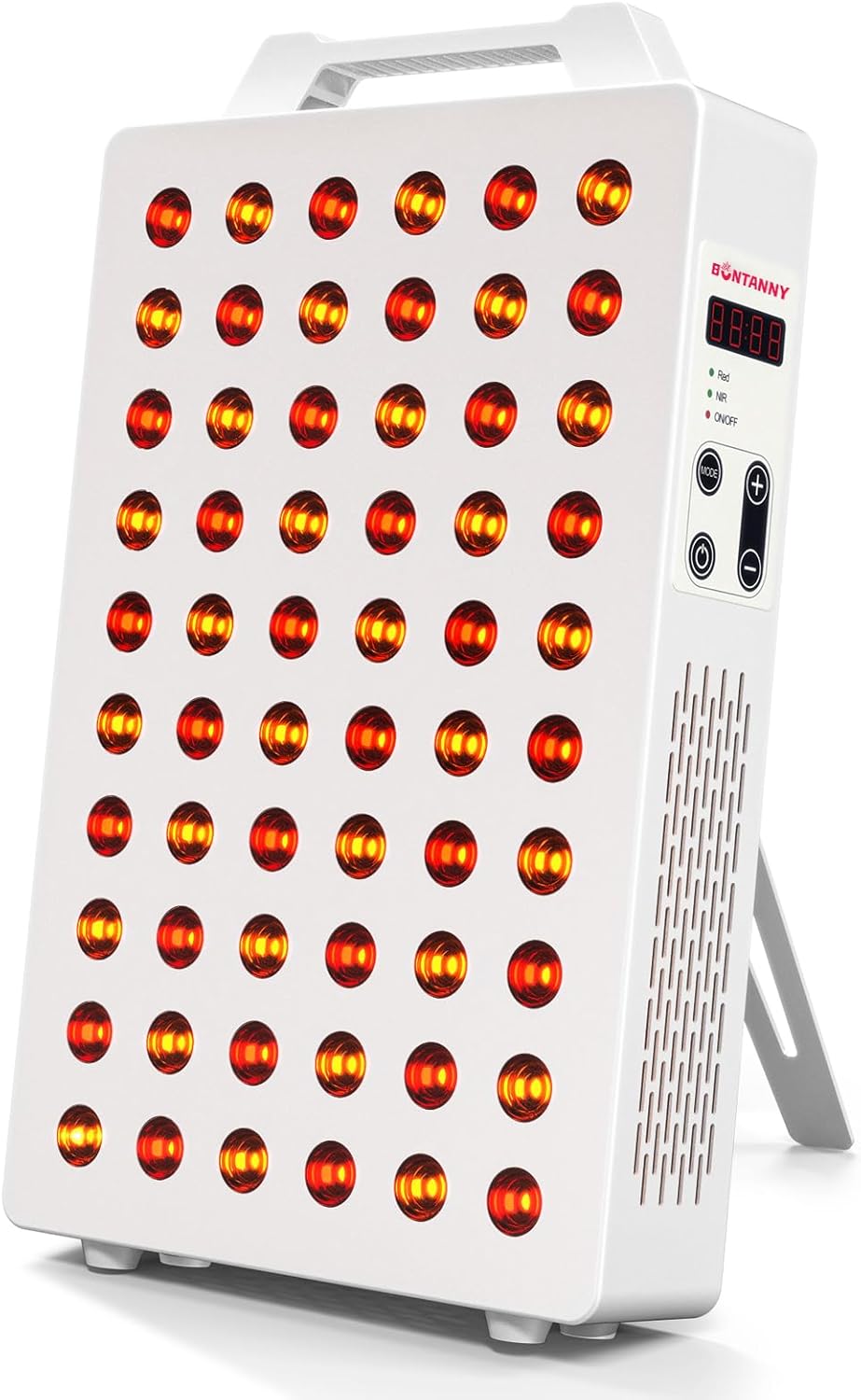
BONTANNY Red Light Therapy (630/660/810/830/850nm) 5 Wavelengths
BONTANNY
Explicit multiband device listing 630/660nm red plus 810/830/850nm near‑infrared — a practical match for the combined‑wavelength approach. Higher price than basic caps but gives clear wavelength coverage.

Capillus SPECTRUM Red Light Therapy Cap
Capillus
Capillus is a well‑known cap format for LLLT. The SPECTRUM naming suggests broad coverage; verify the specific listing for explicit NIR wavelengths (800–850nm) if combined-band therapy is your goal.

Red Light Therapy Lamp, Full Body Infrared Light with 850nm x2
MICROENE
Ultra‑budget full‑body lamp with two 850nm NIR emitters. Good for adding deep‑penetrating NIR, but this product supplies NIR only (no 630–660nm red). Best used as a supplemental NIR source paired with a red device for combined coverage.
Buying Notes
Look for explicit wavelength listings (630–660nm and 800–850nm), clear irradiance or treatment time guidance, comfortable fit or placement for consistent use, and realistic session lengths (commonly 10–20 minutes per session several times per week). If a device supplies only one band (red or NIR), plan to pair it with a complementary source. Prioritize safety (eye protection for high‑power lamps) and ease of use to maintain consistency.
Red Light Therapy for Hair Growth, Qydenova Wireless Regrowth Cap: pros and cons
Pros
- Cap form factor for hands‑free use
- Wireless — good for portability
- Very budget‑friendly price
Cons
- Listing focuses on red therapy; NIR inclusion is not clearly stated — check specs
- Irradiance/output details not prominently listed (affects session timing)
- Lower‑cost caps often have fewer diodes/less power than clinical devices
Wireless cap-style LED device marketed for hair regrowth. Affordable and portable; listing emphasizes red light therapy. Confirm whether the specific model includes near‑infrared emitters (800–850nm) if you want combined-band coverage.
Red Light Therapy for Hair Growth, Qydenova Wireless Regrowth Cap: score breakdown
BONTANNY Red Light Therapy (630/660/810/830/850nm) 5 Wavelengths: pros and cons
Pros
- Clear listing of both red (630/660nm) and NIR (810/830/850nm)
- Multiband design simplifies combined exposure
- Likely stronger spectrum coverage than single‑band devices
Cons
- Higher price than basic caps and budget lamps
- Device form factor may require positioning adjustments for full scalp coverage
- Check irradiance and recommended session time on the product page
Explicit multiband device listing 630/660nm red plus 810/830/850nm near‑infrared — a practical match for the combined‑wavelength approach. Higher price than basic caps but gives clear wavelength coverage.
BONTANNY Red Light Therapy (630/660/810/830/850nm) 5 Wavelengths: score breakdown
Capillus SPECTRUM Red Light Therapy Cap: pros and cons
Pros
- Cap-style — hands‑free and easy to wear
- From an established brand associated with cap devices
Cons
- Listing may not clearly state NIR inclusion — confirm before buying for combined use
- Price listing appears unusual; verify the seller and product specifics
- Irradiance and session guidance should be checked
Capillus is a well‑known cap format for LLLT. The SPECTRUM naming suggests broad coverage; verify the specific listing for explicit NIR wavelengths (800–850nm) if combined-band therapy is your goal.
Capillus SPECTRUM Red Light Therapy Cap: score breakdown
Red Light Therapy Lamp, Full Body Infrared Light with 850nm x2: pros and cons
Pros
- Very low price
- Provides 850nm near‑infrared wavelength (deeper penetration potential)
- Can supplement a red device to achieve dual-band exposure
Cons
- NIR-only — no 630–660nm red included
- Build quality and safety features may be limited at this price point
- Irradiance and recommended treatment distance/time may be unclear
Ultra‑budget full‑body lamp with two 850nm NIR emitters. Good for adding deep‑penetrating NIR, but this product supplies NIR only (no 630–660nm red). Best used as a supplemental NIR source paired with a red device for combined coverage.
Red Light Therapy Lamp, Full Body Infrared Light with 850nm x2: score breakdown
Frequently Asked Questions
Do I need both red and near‑infrared?
Not strictly — red and NIR target different skin depths. Combined devices cover more tissue; if a device has only one band, you can pair it with a complementary source for fuller coverage.
How long should each session be?
Typical practical sessions are 10–20 minutes per area, 3–5 times per week. Follow the manufacturer’s guidance and aim for consistent use rather than occasional longer sessions.
How soon will I notice changes?
Results vary. Many users track changes over 12–24 weeks of consistent use; short‑term improvements in scalp comfort or hair appearance may show earlier.
Are these devices safe to use at home?
Most consumer LED caps and lamps are safe when used as directed; avoid staring into LEDs and use eye protection for high‑power lamps. Follow manufacturer instructions.