What You Need To Know
Red (roughly 630–660 nm) and near‑infrared (≈800–850 nm) light are commonly used together because they work on overlapping scalp biology (mitochondrial activity, microcirculation, inflammation modulation). When choosing a device, the three practical knobs are: output power/irradiance (mW/cm²), session dose (J/cm²), and coverage (how much scalp you treat per session). Below are four validated Amazon-available devices, listed in the supplied ranking order, with quick takeaways on who they suit and what to expect for session timing and frequency.
Red Light Therapy for Hair Growth, Qydenova Wireless Regrowth Cap
Red Light Therapy for Hair Growth, Qydenova Wireless Regrowth Cap stood out for budget-conscious users who want a portable, easy-to-wear cap for frequent sessions. and balanced scoring across the most useful buying criteria.
View Deal On Amazon
Best dual red and near-infrared LED devices for thicker hair and scalp health
Qydenova Wireless Regrowth Cap — best budget, portable cap for daily use. Red Light Therapy Hat with Near-Infrared LEDs — midprice hat that explicitly includes NIR LEDs for combined wavelengths. Capillus SPECTRUM — recognizable cap-style brand with broad coverage and convenience. Recover Red — desktop/full-body panel specifying 660 nm and 850 nm; higher power and multi-use but less scalp‑specific than a fitted cap. Tradeoffs: caps = best coverage/convenience for scalp; panels = higher output and flexibility but require positioning and possibly longer sessions for scalp dose.
Red Light Therapy for Hair Growth, Qydenova Wireless Regrowth Cap
Qydenova
A budget-friendly wireless cap marketed for hair regrowth and strengthening. Designed as a hands-free cap for regular use and daily convenience; marketed primarily as a red-light regrowth cap.
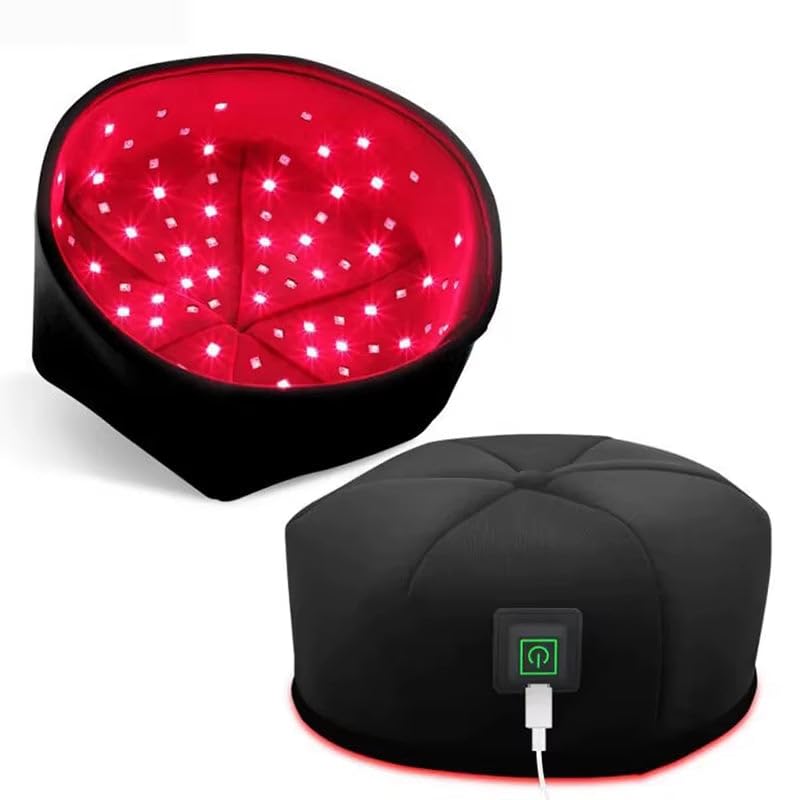
Red Light Therapy Hat with Near-Infrared LEDs – Hair Growth
A mid-price therapy hat that explicitly includes near‑infrared LEDs in addition to red LEDs. Marketed for combined red + NIR scalp exposure in a cap form factor.

Capillus SPECTRUM Red Light Therapy Cap
Capillus
A cap-style device from a recognizable brand in the hair-light category, designed for hands-free scalp coverage and daily use. Marketed for broad-spectrum or multi-LED coverage depending on the model.

Recover Red Next-Generation Full Body Red Light Device (660nm & 850nm)
Recover Red
A higher-output multi-use device that specifies 660 nm (red) and 850 nm (near‑infrared). Designed as a panel for whole-body and targeted use — offers higher irradiance per area than many caps but requires manual positioning for scalp treatment.
Buying Notes
1) Look for wavelength info: a true red+NIR combo will list both ranges (if you want both). 2) Check irradiance or lamp count—higher mW/cm² shortens session time. 3) Aim for an energy dose around 4–10 J/cm² per treatment area (typical consumer guidance); adjust time based on device power. 4) Session frequency: 3–5×/week early on, then maintenance 2–3×/week. 5) Choose form factor for compliance: cap/hats for hands‑free scalp coverage, panels for targeted zones or whole‑body use. 6) Confirm safety features, warranty and return window.
Red Light Therapy for Hair Growth, Qydenova Wireless Regrowth Cap: pros and cons
Pros
- Affordable entry price
- Hands-free wireless cap—easy compliance
- Lightweight and portable
Cons
- Manufacturer details on irradiance/wavelengths are limited in the listing
- Likely lower irradiance than clinical-grade options—longer sessions may be needed
- Less documentation on clinical support
A budget-friendly wireless cap marketed for hair regrowth and strengthening. Designed as a hands-free cap for regular use and daily convenience; marketed primarily as a red-light regrowth cap.
Red Light Therapy for Hair Growth, Qydenova Wireless Regrowth Cap: score breakdown
Red Light Therapy Hat with Near-Infrared LEDs – Hair Growth: pros and cons
Pros
- Explicitly advertises near‑infrared LEDs in addition to red
- Hands-free cap design for full scalp coverage
- Affordable for a red+NIR combo
Cons
- Listing may lack detailed power/irradiance specs—hard to calculate precise session dose
- Build and long-term durability may vary between sellers
A mid-price therapy hat that explicitly includes near‑infrared LEDs in addition to red LEDs. Marketed for combined red + NIR scalp exposure in a cap form factor.
Red Light Therapy Hat with Near-Infrared LEDs – Hair Growth: score breakdown
Capillus SPECTRUM Red Light Therapy Cap: pros and cons
Pros
- Brand recognition in the hair LED space
- Good scalp coverage due to cap form factor
- Hands-free and easy to integrate into routine
Cons
- Listing price appears anomalous—verify seller details and model before purchase
- Specific wavelength/irradiance details should be checked per SKU
A cap-style device from a recognizable brand in the hair-light category, designed for hands-free scalp coverage and daily use. Marketed for broad-spectrum or multi-LED coverage depending on the model.
Capillus SPECTRUM Red Light Therapy Cap: score breakdown
Recover Red Next-Generation Full Body Red Light Device (660nm & 850nm): pros and cons
Pros
- Specifies both 660 nm and 850 nm wavelengths
- Higher output/panel format can deliver energy to target areas more quickly
- Versatile—can be used for scalp and larger body areas
Cons
- Panel requires holding or positioning for scalp—less hands‑free than a fitted cap
- Larger footprint and higher upfront cost than caps
A higher-output multi-use device that specifies 660 nm (red) and 850 nm (near‑infrared). Designed as a panel for whole-body and targeted use — offers higher irradiance per area than many caps but requires manual positioning for scalp treatment.
Recover Red Next-Generation Full Body Red Light Device (660nm & 850nm): score breakdown
Frequently Asked Questions
Do I need both red and near‑infrared wavelengths?
Red (630–660 nm) and NIR (800–850 nm) penetrate differently and have complementary effects on scalp tissue; combined devices can be useful, but consistent dosing and coverage matter more than having both if you can only choose one.
How long is a typical session?
Consumer devices commonly recommend 10–20 minutes per session. Adjust time to hit an energy dose of around 4–10 J/cm² for the treated area depending on the device's output.
How often should I use a device?
A practical schedule is 3–5 times per week for the first 12–16 weeks, then reduce to 2–3 times per week for maintenance, monitoring results and tolerance.
Are there safety concerns?
Red/NIR light is generally well tolerated; avoid direct eye exposure to LEDs and follow manufacturer safety instructions. Check with a clinician if you have photosensitive conditions or are on photosensitising medications.
How will I know if it’s working?
Look for gradual improvements in hair density, thickness or reduced shedding over 12–24 weeks. Track photos and consistency rather than expecting quick changes.